





Action in the equity market over the past two days shows an infrequent but not uncommon pattern that occurred most often during the COVID era. Over the past 10 years, there have been 15 days on which the S&P 500 has declined by 4.0% or more. Of those, only six were preceded by a day posting a gain of +1% or more. Outside of COVID, that particular setup has occurred only three times in the past 10 years: twice in 2022 and again this week. So, while equity markets are “only” 6% from an all-time high, these unusual signals can be consequential and warrant deeper consideration.
Equity markets have been churning since early June, with the S&P 500 marking time and the tech sector struggling, all against a backdrop of strong earnings growth and a stable economy.
The simplest explanation is that markets have likely been following prediction markets, anticipating a shift in the political backdrop, and forecasting a decline in growth rates due to a slower data center buildout and the likelihood of political battles throwing sand in the gears of commerce.
The selloff on Thursday, November 5, is likely the culmination of the political adjustment, though not necessarily the end of market jitters. A sharp increase in volatility and metrics of positioning for “fast money” such as hedge funds and quant firms point to a significant shift in portfolios that has likely already played out. The more important question is: where do we go from here?
While the fundamental picture is strong, that view is unlikely to be reinforced until early next year, when the next earnings cycle gets underway. In the meantime, concerns over slowing growth rates and the still-present geopolitical risk in the Strait of Hormuz may weigh on sentiment.
The chart below shows how prices for both the S&P 500 and the S&P tech sector have generally been following earnings higher. Markets that are following fundamentals are usually fairly durable and have a long runway.
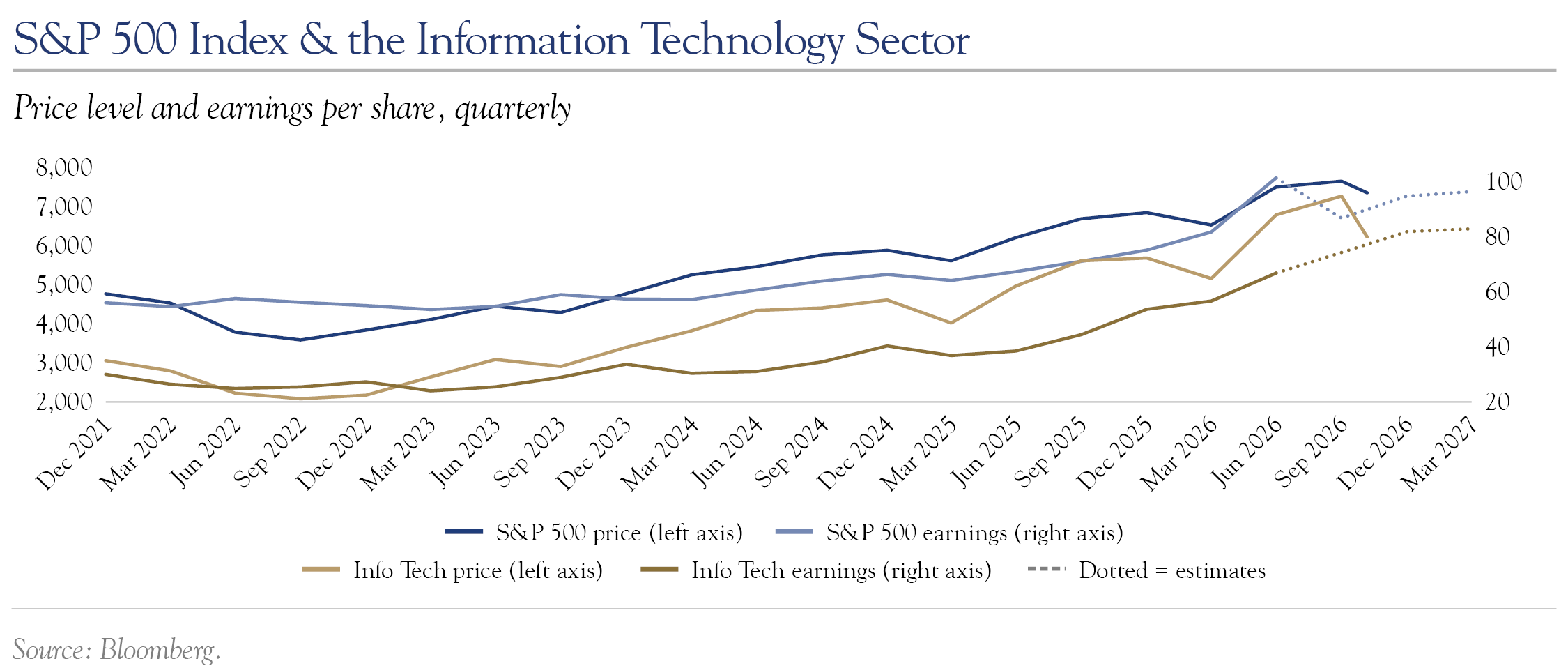
In fact, price appreciation has lagged earnings growth, and valuation (price/earnings) has improved. For several quarters, we have noted that strong earnings gains have been met with an apathetic response in price action. This may indicate a cycle is moving from an enthusiastic phase to one that is more measured and circumspect.
Our guidance from the day before the election remains relevant today. Overall, we view recent jitters in the equity market and a decline in valuation as a reasonable response to a central issue (AI) that has become more complicated. This backdrop informs our view of a balanced risk outlook, aiming to be at long-term risk targets with robust diversification.
This communication contains the personal opinions, as of the date set forth herein, about the securities, investments and/or economic subjects discussed by Mr. Teeter. No part of Mr. Teeter’s compensation was, is or will be related to any specific views contained in these materials. This communication is intended for information purposes only and does not recommend or solicit the purchase or sale of specific securities or investment services. Readers should not infer or assume that any securities, sectors or markets described were or will be profitable or are appropriate to meet the objectives, situation or needs of a particular individual or family, as the implementation of any financial strategy should only be made after consultation with your attorney, tax advisor and investment advisor. All material presented is compiled from sources believed to be reliable, but accuracy or completeness cannot be guaranteed. © Silvercrest Asset Management Group LLC